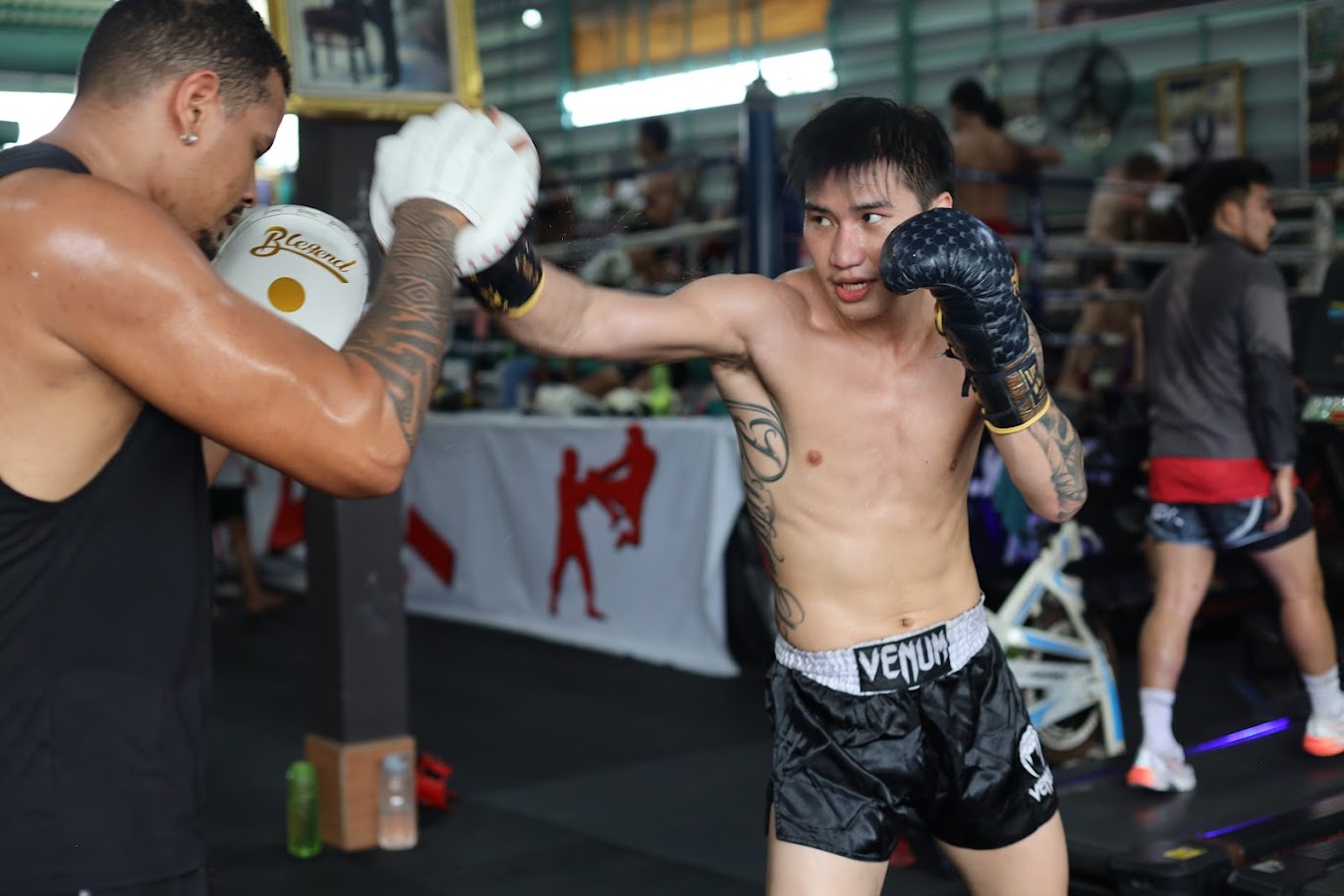
The exchange continues after contact.
A Muay Thai roundhouse kick is not finished when the shin reaches the target. You still need a position from which you can defend, move or attack again. If the kick lands but you need two hurried steps to find your feet, the recovery deserves as much attention as the strike.
Start by asking one practical question: could you respond to a controlled return without first repairing your stance? This is more useful than judging the kick only by its sound or how hard it moved the bag.
The aim is not to pull every kick back along an identical path. Contact, a block and a miss create different situations. Learn to recognise which one you are recovering from.
Check where the problem begins.
A recovery problem can begin before the leg leaves the floor. If you reach from too far away or take an entry step that stretches your stance beyond control, trying to retract faster may leave the original problem untouched.
Ask your coach to watch a single, familiar kick at a manageable pace. Check the starting distance, the support foot’s turn and where your body finishes. Look for the moment when the movement becomes a fall you have to catch.
Keep the target and pace consistent while changing one detail. If you can recover from a shorter, controlled kick but lose the position when you add power, build from the version you can organise. For the wider context, see how to think about distance in Muay Thai.
Practise three different outcomes.
When the kick lands
On pads or a bag, practise returning from contact into the stance your coach has asked you to use. Keep your hands available and finish able to move. Do not pause to admire the impact.
Notice whether the target is doing too much of the work for you. A heavy bag can provide contact that is absent when someone moves away. A clean return on the bag is a useful starting point, but it does not cover every outcome.
When the kick is blocked
A block can change the leg’s return and the space between you. Recover the position you actually have, then account for the opponent. A familiar kick landing on a different surface is a reason to reassess, not to continue the next strike automatically.
Work on this with a coach at light, agreed intensity and with the appropriate protective equipment. The task is to keep the transition organised. Hard shin-on-shin contact is unnecessary for learning that task.
When the kick misses
A miss gives you no contact to return from. Start with slow, controlled shadow kicks and ask your coach to teach the recovery for the kick you are using. Depending on the rotation, that may involve bringing the leg back or completing a controlled turn before facing the opponent again.
Avoid forcing a powerful kick to stop abruptly just to reproduce a pose. Build control at lower speed first, with clear space around you. Full-power misses and spinning follow-ups are not the starting exercise.
Recover the stance, guard and view together.
Putting the kicking foot down is only part of recovery. Your hands need to be available, and you need to know where the opponent is. Watch for the habit of landing, looking up, raising the guard and only then deciding what to do.
Returning to your original stance is a useful starting constraint. A deliberate step-through or stance change can also be functional when your coach has taught it for that situation. The difference is whether you can use the new position immediately or need to escape a position you did not intend.
An exit needs a reason too. If the opponent has moved, the space you want may have changed. Take the small adjustment that preserves your balance and view rather than adding the same large backward step after every kick. The next action depends on the exchange, as explored in why combinations can fail in sparring.
Add the return in a controlled partner drill.
Use a kick you already know and work with a coach or experienced pad holder. Agree on the target, pace and return before starting. Treat these as stages to progress through, not a race to finish.
First, organise the finish. Throw five controlled single kicks to the pad. After each one, recover your stance and take one small movement your coach names. If that movement requires a rescue hop or a crossed stance, slow down and review the kick.
Next, add one known response. After the kick, the pad holder gives a gentle, agreed touch to your gloves. Keep the guard available as the leg returns, then recover your position. This rehearses a transition; it does not test reactions to an unpredictable attack.
Finally, change one piece of information. The holder sometimes gives that same touch and sometimes stays still. Keep the contact light and the options limited. You should remain ready without inventing a defensive movement when no return comes. Introduce blocked or missed kicks separately under your coach’s direction.
Easton Training Center’s guide to balance in Muay Thai makes a useful distinction: maintaining balance alone differs from doing so while a partner responds. The progression here gives that difference a specific training task.
Review the moment after the kick.
Film a short set with your whole body and feet visible, where recording is permitted. Review the finish of five kicks: were you still facing the partner, were your hands available, and could you perform the agreed next action without reorganising first?
Write down the recurring problem. “I crossed my feet on three recoveries” is something you can work on. Keep the task comparable when you revisit it. A better score in a cooperative drill does not prove that the same skill is reliable in free sparring.
The kick should leave you with options. Train the return until the next action belongs to the same exchange.